Saturday, 15 November 2008

An ace comment, sadly anonymous


Wherever we are in the world, whatever we are doing, we lucky few who have had the honour of wearing the uniform and standing alongside the best that a country has to offer, will always remember them. On those occasions when men and women such as we gather, we will raise a glass and say, with quiet pride, "they were our friends".

Bang on. Pity the author is so shy

.

Friday, 14 November 2008

Lest We Forget


The memorial plaque in Palace Barracks dedicated to those members of 321 Explosive Ordnance Disposal Company who lost their lives during the troubles in Northern Ireland. I recall with fondness and sadness Warrant Officers Mick O'Neil and John Howard with whom I had the honour to serve.

We must also respect the memories of all Ammunition Technicians and Technical Officers, all Bomb Disposal Officers and Technicians of every nationality, their courageous support teams, the signallers, the drivers, the search teams, the escorts and all mine clearance experts worldwide who have been killed or wounded in the course of their duties, sacrificing their lives or health in order to save so many, and we should all be grateful that there are still men and women brave and dedicated enough to continue to volounteer for some of the most dangerous duties in the world so that others may live their lives a little safer.

Thursday, 25 September 2008

To Tommy Atkins

I stumbled across this recently. I recited it at my father's funeral. He was called Thomas as well.

To T. A.
I have made for you a song,
And it may be right or wrong,
But only you can tell me if it's true;
I have tried for to explain
Both your pleasure and your pain,
And, Thomas, here's my best respects to you!

O there'll surely come a day
When they'll give you all your pay,
And treat you as a Christian ought to do;
So, until that day comes round,
Heaven keep you safe and sound,
And, Thomas, here's my best respects to you!
R. K.

This was written so long ago by the Soldier's Poet and it still holds true today for the shabby way servicemen and women are treated all over the world.

Tuesday, 9 September 2008

A new citizen of the World...


so where is he better off?


There are lots of things that could, and should, be explored here in Angola. The trouble is that editors tend not to be particularly interested in Angola as a rule so one can end up putting in a lot of work to no avail.

The typical angle on Angola is the rich living it up while the poor starve (the latest published in the Guardian/Observer a week ago on Sunday; mine were the only positive comments in it).

I am not an apologist for the ruling party, now returned with a massive majority after the recent peaceful elections. Rather, I am a realist and having been here for fifteen years and having seen the very worst of the civil war and the extraordinary changes made since, I accept that on balance, the government of Angola is doing a good job under very difficult circumstances and things are most definitely better. Look at it this way. While old grannies in UK freeze to death because they cannot afford to pay their energy bills to foreign owned companies enjoying ludicrous profits, the executives of which are paying themselves outrageous bonuses yet this is considered free market economics, the Angolan ministers rake a bit off the top but are actually improving the country yet are accused of corruption. By whose standards?

Rather than looking at it as corruption, we should consider that Angolan politicians have only been doing exactly the same as our Politicians, City Boys and CEOs have done; they have merely awarded themselves a very big salary. Unlike our lot, though, instead of presiding over an ever more dire economy or asset stripping a vulnerable company mercilessly consigning its workforce to the dole queue, this lot are managing the fastest growing economy in the world. A growth that flies in the face of the global downturn.

Now there is an angle to be explored. Rather than the clichéd exposure of corruption perpetrated by arbitrarily targeted individuals, how about a general comparison of the moral issues; why is one sort of rapacious behaviour considered acceptable business practice and another corruption, and of the two groups studied, which is actually doing the better job? Unlike Global Witness et al whose approach is inevitably one sided, a study such as this should make all sides sit up and think. It’s about time the Emperor’s new clothes were exposed for what they are. The bonuses enjoyed in the first world seem rarely performance related, more a right. Yet dipping your hand into the Angolan till is corruption if you are Angolan, perfectly OK if you are French. What is the difference between fleecing shareholders or a population? Are they not all people who have placed their trust in the hands of a few?

Traditionally, oil rich countries tend to ignore other market sectors, such as fisheries and agriculture, in favour of the carbon fuelled Milk Cow with the paradoxical result of urban deprivation and rural poverty. Angola, however, has instigated agricultural loans; easier access to finance for those wishing to rehabilitate or develop farms. Same for the fishing industry. Now that the interior is safe, the government is encouraging investment in mineral exploitation beyond the diamond industry.

The coincidence of high oil prices and the onset of peace places Angola in a similar position to Nigeria in the 70’s. Nigeria wasted the opportunity with costly white elephant projects and the blatant corruption that painted the face of African economics for decades, and the grease stained hand of external influence was writ large on the walls of every African President’s palace. You are not telling me that Mobuto Sese Seko could have raped his country for so long without the support of the United States? This is a temptation which Angola is now resisting, concentrating instead on the rehabilitation and construction of sensible infrastructure and keeping corrupt practices within ‘acceptable’ limits. It has shunned the advice of the IMF, has always been wary of the US and is finally reigning in the French. You can do business in Angola but increasingly only under their terms. You may still be required to pay the odd ‘consultancy’ fee but at least they are leaving enough in the trough to fund improvements.

Leading up to the first elections in 1992, the governing party, MPLA, honestly thought it might lose the elections to UNITA. African politics are such that opposition parties have virtually no funds whatsoever with which to mount an effective opposition campaign. Knowing this, and under cover of a recently declared policy of denationalisation as part of a move from socialism to a free market economy, the government gave party loyalists control of most of the major companies in Angola so that, in the event of defeat, they had their own independent sources of funding. MPLA did scrape a victory but UNITA refused to accept the result. The return to war post 1992 resulted in an imperative to generate the funds necessary to prosecute the war since the end of the cold war also saw the termination of the proxy superpower war and ready supplies of war materiel.

Naturally, these two coincidences made a few people very rich and doing business here over the next decade necessitated some very questionable bedfellows along with the creative accounting that the United States eschews, (but its own lawyers and accountants are experts at circumventing) and which the French, with Gallic shrugs, accepted as part of the field of play.

The end of hostilities with the death of Savimbi in 2002 has allowed the government to gradually swing from the widely acknowledged and criticised opaque war economy to a steadily more transparent peace time economy the benefits of which are tangible. There are those who suggest the government’s investment over recent years were nothing more than a cynical attempt to buy the electorate. I would argue that there are many cheaper ways of buying the vote than building new hospitals, railways and thousands of kilometres of roads. These are long term investments benefiting any party who ends up in power. Faced with literally concrete evidence of the government’s determination to improve the country, journalists typically now resort to ridiculing these efforts by suggesting in print, to quote an example from a recent article, that there is little use in a new hospital if it does not have the qualified staff to run it. Had the correspondent bothered to visit one of these new hospitals, she would have found it staffed by expatriates from Brazil, Portugal, Cuba and even to my surprise, Canada.

My first son was born in 1999 and I made sure I sent his mother to Cape Town to have the baby. My second son was born only a week ago in the Clinica Sagrada Esperanca in Luanda. If, with all my experience and above all means, I am content to allow my second son to be born in an Angolan hospital, then surely that speaks volumes for the improvements that have been made? The big joke here is that I never considered a state hospital for the birth and was blinkered when I chose the country’s most prestigious private hospital and paid well for the privilege. I recently visited the new state hospitals in Luanda, Lubango and Huambo, all of which are free, and was stunned by the standards. I mean, marble bloody floors and all the latest kit including whole body scanners. For free? In UK we have the brightest minds running the government and civil service yet, according to Sky News this morning, the NHS will be bankrupt in four years.

So which country has the brightest prospects?

The UK, the citizens of which are suffering an ever increasing tax burden? A country where food and energy costs are leaping at a rate higher than Angola’s official and far more transparently calculated rate of inflation, and where house prices are plummeting even faster? A country in which government has effectively put a cap on the price of life and where every day new terms to describe the financial woes that beset its habitants are coined? Now a British citizen may not merely be afflicted with ‘negative equity’, his problem will likely be compounded by ‘energy poverty’. I suppose this sounds better than the frank admission that the value of your house does not cover the mortgage and you cannot pay your gas bill let alone fill your car with petrol. Or even tax the bloody thing. A country that has just posted a zero economic growth rate. Unless your name is Alistair Darling, I suspect that no UK politician would be so honest as to admit such gross incompetence to his electorate while at the same time voting himself and his colleagues a pay rise.

So what about Angola? A country the growth rate of which has just been revised upwards from an already unparalleled 23%. A country that has, in the last five years, built more roads, hospitals, railway lines, power stations and schools and connected more people to reliable power and clean water than the UK, the world’s fourth richest economy, has done in the last twenty years? Sure, Angola has its problems and is by no means perfect but don’t forget, the bombs stopped dropping on England sixty-three years ago as opposed to six years ago in Angola.

No wonder Scotland wants to cede from the Union.

The same recent article I referred to earlier suggested that Angolans should vote with their feet, or rather with the lack of their use. A clumsy suggestion; the best way Angolan citizens could protest their mal-afflictions being not to vote at all. What point hard fought for democracy then?

Well the Angolans did vote. And they turned out in numbers that would make a European or US politician bleed with envy. There was none of the violence or intimidation that beset the Kenyan or Zimbabwean polls. None of the blatant rhetoric that accompanies first world politics. Instead, every citizen wasn’t so much encouraged to vote as obliged to. No voter’s registration card meant you could not register a land purchase. You could not register your child for school. If you were not registered, life became more complicated. The government forced democracy on its populace and they responded with alacrity. Every one of the multitude of political parties campaigning, as far as I could tell by hours of mostly boring, sometimes hilarious, party political broadcasts, enjoyed equal exposure on state television and the population were encouraged to ‘vote with their hearts’ and warned that their choice was constitutionally secret.

The opposition parties painted their neighbourhood strongholds in their various colours and put up billboards promising change and a better future. The government quietly erected signs stating simply: so many thousands of kilometres of roads built, so many millions of square metres of land demined, so many new hospital beds and made sure that the new power stations produced and, of course, the face of the benign dictator, the architect of all this progress, stared at his electorate from hoardings, flags and T-shirts and the voters responded.

At first, turn out was slow. People were scared that there would be a repeat of 1992. Then there was confusion. Ballot papers were not delivered on time to some of the thousands of improvised polling stations in schools, hospitals or simple roadside tents. There was no violence so people decided to vote but time was running out. The government ordered the polling stations to stay open late. Then they announced that the polling stations would reopen the following day. The opposition cried foul and demanded a rerun of the Luanda vote. The population said that if Samakuva, the UNITA leader, prevented them from performing their ‘civic duty’, they would kill him. No arguing with that.

MPLA won by a landslide 86%.

The population did vote with their feet and afterwards proudly displayed index fingers blackened by indelible ink. They had exercised their democratic right, in many cases for the very first time, and had voted unanimously for the party that has wrought so much change in the last few years. Yes, you will still hear cynical comments about the ‘Futungo Clique’, the ruling class running Angola like a personal corporation but these Executive Officers seem to be doing a better job of it than most. In five years, they have endowed the country with peace, economic prosperity and above all, hope. There is a long way to go, still many people that need assistance but the general consensus is, those in charge are earning their bonuses and deserve another few years at the helm.

I hope that I and ten million or so other people are right. This is the world into which I bring Alexander and continue to look after Dominic and Marcia.

Wednesday, 16 July 2008

I guess I will never learn...


No one would be surprised to learn that children, the essential ingredients of a happy, stable existence are expensive.

I was two weeks late being born. The trees on Unter-den-Linden in Berlin back in 1959 were gently scattering their blossoms across wide pavements in the shade of buildings still scarred by the attention of the allies while my mother laboured with an increasingly fidgety baby who remained stubbornly reluctant to enter the exciting new world awaiting him.

No doubt exasperated by my tardiness, the consultant at the Military Hospital in Spandau advised my parents that a caesarean section and forced expulsion from my residence of the last nine months and disputed few weeks was the only solution. The time of my birth, therefore, was set for 10am the next day.

My father shrugged and pushed off to the Sergeant’s Mess leaving my mother to her rising panic. This was 1959 after all, and the idea of being sliced open and having the child she had nurtured at great physical expense dragged out of her womb by its heels was traumatic to say the least. I can imagine Aniela Gelinsky, my Great Grandmother, who spoke no English and German with a thick Polish accent, spitting on the shadows of the gynaecologists and pointing out that in her day girls gave birth in a barn without complaint and still had to make sure the men were fed at the end of the day. A turn in the fields would do the trick. Nature should take its course, not be hurried by the sacrilegious hands of mere mortals keen to empty a hospital bed space.

With a few litres of Berliner Weisse inside him and well used to the black art of military humour, my father was not about to fall for yet another prank and probably not so politely told the caller attempting to inform the father-to-be that his wife had suddenly gone into hysterical labour to fuck off. He knew his son would be born at 10 am the next morning so he had time for a few more jars and a decent kip before the wondrous event.

I am proud to say that my father was present at my birth, albeit under Military Police escort and bearing the scars of a verbal exchange that had evidently quickly turned physical. He held me briefly in his arms and then did his 28 days. He probably slept better than my mum and mopping jailroom floors and making his own bed was good training for the months to come.

Ever since then, I have always been late. I am famous for it. Years later, following my father’s footsteps, I had the full weight of the Manual of Military law launched at me yet was late for my own hearing. Fools, they should have jailed me as they did my father. At least I would have been forced to turn up on time and saved myself the ire of the Brigadier, a stinging fine and the hangover only self pitying overindulgence the night before in the company of some very sympathetic US and Canadian officers can induce. They, our over-the-pond and unforgivably maligned cousins, were even kind enough to stuff me into my dress uniform and help me start the car after pushing me into it. I am sure suiting me up with my Sam Browne on the wrong way round was a joke rather than because, as their uniforms resemble pressed boiler suits with everything held on with Velcro, they were unfamiliar with the addenda we adorn ourselves daily in the British Army.

Still, the Adjutant was a decent bloke so, with a pitying glance, he sorted me out and gave me a freshmint before pushing me in the direction of my fate. You carry your sword in and success is measured by whether on your way out it is still on your hip or jammed in your chest. I had forgotten mine so I had the Brigadier’s writing implement jammed in my eye. Fortunately, he was considered as dangerously incompetent as I was so he only had wax crayons to hand.

As I said, the Adjutant was a decent bloke.

I have rambled on a bit. I started by pointing out the obvious, kids are expensive, and then I banged on about a hereditary tendency to be late and get into trouble but the two are inextricably linked in the Gowans family.

Everyone recognises that it does cost money to look after a child: food, clothes, school fees and a thousand discarded toys, but no man can be mentally prepared for the costs before birth.

And I am not talking about anything as cheap and reasonable as weekly private medical attention in a city so expensive even Michael Winner would never consider writing a restaurant review here. He couldn’t afford it even if he could get an entry visa.

The house has only recently been built. A few months ago, I accepted that the constant attention of various tradesmen of the building kind, to sort this and that out and just tidy this bit up had sullied the place somewhat so agreed to having it all redecorated again.

Now I am told that the bedroom furniture ‘simply will not do’. Apparently the bed is too small and where will the baby sleep?

In a cot, preferably in any bedroom other than mine I thought surveying a bed big enough for a testosterone laden Prince to land his helicopter, shag the entire neighbourhood and get in a decent bit of rough shooting to boot without having to put a foot on the bedroom floor. It is so big I am amazed that after leopard crawling across a slightly larger version of Salisbury plain dragging a weapon the effectiveness of which has decreased with age and distance and the amount of post prandial whisky I have consumed, I still had the energy to get Marcia pregnant in the first place.

Or maybe it was the gardener. After all, I am away a lot. I’ll find out pretty soon, though.

If it was the driver, I will be really angry. Any fool can drive but it takes a man with real skill to turn desert into Eden. I would sooner look after the gardener’s genes than those of a wannabe Luis Hamilton who has remoulded all the panels of my truck against various gate posts and the bodies of those innocent road users arrogant enough to get in his way.

All the curtains need to be replaced. And the poles. Because the new curtains will have different lengths. That means the old holes will need to be filled which will leave scars that must be painted over. So we might as well do the whole house again. Even the armchair that has served me faithfully all these years is to be consigned to the annex. My armchair!

At least it won’t be lonely. It will be joined by the sofas, my ridiculously small side tables (perfectly acceptable for the demands placed on them: an ashtray and a whisky glass) and, incomprehensibly, my Persian rugs (although the latter might be a ploy for a new vacuum cleaner).

Marcia is determined to ensure Alexander enters a pristine new world. It is costing me a fortune and all I can pray for is that the little sod breaks a family tradition and arrives on time. Only painful labour will stop Marcia’s spending spree.

If he doesn’t, he better be a bloody good gardener.

Tuesday, 17 June 2008

A rehash, but also an update...

Not many expatriates can claim to have lived in the same shanty-towns that the impoverished endure. I did, occasionally enjoying town water and electricity, but never at the same time. I had the misfortune to go bust in Angola and faced with a dole queue in UK, decided I would rather tough it out here. I lived in what Angolans refer to as a ‘Cubico’, the colloquial name for the breeze block, wriggly tin covered cubicles that one can rent cheaply in the less trendy and invariably muddier parts of town.

Angola has its problems. Anyone who visits the place will immediately be struck by evidence of squalor and hardship. Go to any African country and more than a few others, and the same is evident. What encourages me about Angola is that things are definitely improving.

The Economist predicts growth of over 21 per cent GDP this year, the highest of any country in the world. The changes wrought in the first years of peace are truly breathtaking. Cynics say this is merely the government trying to win imminent elections to continue their decades long reign but name me a government around the world that has not curried the favour of its electorate with a few well thrown crumbs? Here, they are tossing whole bread rolls and that can only be a good thing for a long suffering population.

In his excellent book, The State of Africa, Martin Meredith argues convincingly that major impediments to development in Africa are weak or non-existent land title laws. In developed countries, we may suffer outrageous taxation but at least we can demonstrate legal ownership of what we have. Or at least the banks can. In Africa it was impossible to register the benefits accrued through years of hard labour.

This means the poor will always be poor. A budding entrepreneur with a spark might create a nascent business but without access to finance, his enterprise will remain just that, a good idea generating enough to survive but not enough surplus capital to turn it into a thriving concern.

That, in Angola at least, is about to change.

It was always possible to gain some sort of tentative grasp on property. Title may have been elusive, all property then owned by the State, but you could buy the ‘Chaves’, the ‘Keys’. So, in spite of socialism, property continued to change hands. If you had enough spare cash, you could persuade the original occupants to find somewhere else to live allowing you to accommodate a growing family.

The trouble was, you could not actually own it. Imagine; billions of dollars of potential wealth rendered worthless.

It was rather like possessing a stolen work of art. Sure, you could enjoy it and nominally it was worth a lot but in reality, as an exchangeable commodity, it was toilet paper. Certainly no bank would accept it as collateral.

Granting legal title allows the entrepreneurial spirit access to finance, the leg up they need to turn their idea and hard work into sustainable reality. It allows the many banks that have set up here in Angola keen to do business to lend, confident that their investments are covered. Empower the emergent middle classes and they will be the driving force of the economy. No longer will the value of land be measured solely in terms of the Cassava or Maize it produces or the cattle that graze on it. It will have a tangible value legally recognised by government and financial institutions. It is the break they have all been waiting for without realising it.

At last, a so-called authoritarian and recently socialist government is taking the lead by granting the people their right: personal security and above all, security of tenure. I hope they stop short of high income tax, capital gains tax and death duty but, at the moment, they are on the right track.

A few days ago I was ordered to present the documentation for my house and land at the local government offices. To my surprise, this was not an attempt to fleece me. I was informed that in accordance with new legislation, all local authorities had to survey their areas and register all property so that legal title can finally be confirmed.

The new property law came into effect in Angola on the 15th of June. The local authorities have until September to register all claims. I discussed this with my neighbours, some of whom have land but until now could not afford to build so live in tin shacks. We are all very excited. It means that those who need to can borrow against their land and build. Some want houses. Others restaurants and shops. A depressed neighbourhood will suddenly become affluent and just think of all that employment.

On paper, we are worth a lot more than a week ago. Imagine how much more wealth will be generated with access to capital. Maybe the Economist should revise its forecast because there are a lot of us that cannot sleep at night. Not through worry, but through unaccustomed anticipation.

Friday, 13 June 2008

Testing Tolerance

Pick one to discriminate against...

Two weeks ago, my wife’s thirty year old brother died.

One minute he was bouncing around enjoying life and then 48 hours after feeling a bit poorly he passed through coma and onto death leaving behind a young wife and a two year old daughter.

Naturally, I was away on business and Marcia had to deal with everything herself.

I gave her the support I could, a few sympathetic phone calls and paid for the funeral. Conscience salved I concentrated on work, only marginally interested in the as yet undisclosed cause of such a sudden departure. People here drop dead or get killed all the time. This one was a bit closer to home but I hardly knew the guy and only vaguely recollect an affable individual who had once engaged me in a conversation the details of which I have forgotten.

I have always considered myself free of prejudice. I might have held a few extreme views as a teenager but that was ignorance. Age has a way of tempering attitudes, of eroding the sharp edges of intolerance and besides, is hate really worth the effort?

Racists are insecure. I am areligious, if not irreligious at times and to me, even taking a couple of hours off a week to attend church is an extreme notion, never mind explosive underwear. I am aware of Aids but look at it the same way an airline passenger does the risks of flying. We know we can crash and burn but the chances of it, compared to dying of Malaria in this part of the world for example, are remote. I suppose I thought I was free of prejudice but then again, my convictions had never really been tested.

I was really shocked, therefore, when Marcia phoned me a couple of days ago and told me her brother had been HIV Positive.

Blimey. Aids is something you get if you screw around, were homosexual or a needle swapping drug addict. Normal people didn’t catch it. And especially not your wife’s brother. He had a good job and his wife, widow now, is a bank official. They were normal people building a life for themselves and doing quite well.

Why should the fact his death can now be attributed to Aids, as opposed to some other lethal ailment, make it feel so much closer to home than when I first received the news of his passing?

Before I had time to work out exactly how I felt, the second bombshell dropped.

Marcia took her sister-in-law and two year old niece to a clinic and had them tested. The child tested negative. The young mother was positive.

This was tragic news and even I could appreciate the enormity of it. One minute, a normal life filled with hope for the future, now sudden loss and a death sentence on top. How can you look a child in the eye knowing that having lost her father, and inconsolable to boot, she will inevitably lose her mother as well?

Marcia went on. Now the mother was known to be HIV positive, a stigma had attached to her. Her own family, while sympathetic, was not exactly keen to welcome her back. As far as her husband’s family was concerned, the widow could look after herself. Even though the child is proven HIV negative, no-one is cuddling her anymore. Stigma here is evidently hereditary.

Suddenly I could see where this was going. The child is Marcia’s niece. Marcia could not stand idly by and see her consigned to life’s rubbish tip, the flotsam of human misery washed up on the shores of prejudice. I support two orphanages here so could easily contemplate the child’s desperate future in all its cold, heartless clarity.

I told her, ‘Look Marcia, I understand. One more mouth to feed won’t make any difference, if you want us to take the kid on, I’ll go with that’

‘Two mouths’ says Marcia.

Despite what the less informed may think, and I included myself in this group before the last couple of days of frantic research, Aids is not a death sentence. It is in a way but it isn’t the same as a last cigarette in some forlorn courtyard followed by the firing squad’s bullets thumping into a blind-folded body. Laura is only HIV positive and, since her daughter is negative, one can only assume that infection was recent. She could live for years if not decades. Except that unlike the relatively merciful rapid dispatch by a hail of lead, Laura will not only have to deal with her own fears and understandably volatile emotions, she will have to cope with her expulsion from mainstream society. Imagine looking at your darling baby wondering if you will ever see her grow up? Imagine realising that through no fault of her own, she will never enjoy invitations to fellow classmate's birthday parties? What will happen to her when you are gone? People can be really evil sometimes.

I rang my mother for some advice and she asked, ‘would you drink from the same glass?’ Good question I thought, would I? The thought of living with someone I knew to be HIV positive was disturbing, if not terrifying and really called into question my self professed tolerance, compassion and lack of prejudice.

My Mother advised me not to get involved. She said I had a responsibility to my nine year old son, to Marcia and the soon to be born Alexander. I interpreted this as a Mother’s natural instinct to protect her offspring from any form of danger so will naturally ignore her advice.

Laura and little Cila will come and live with us and I do not care what anyone else thinks. We will not only use the same glass, but the same plates, cups, cutlery and linen. We will sit on the same chairs, relax on the same sofas and swim in the same swimming pool. We will watch the same programmes on the TV and will laugh at the same jokes and if either of them needs a hug, I will give them one.

Laura, sadly, may have a more acute sense of her mortality but in my house, we will all enjoy whatever time we have left.

As a family.

Saturday, 31 May 2008

Things are getting better...

I accept that compared with many Angolans who survive from day to day on incomprehensibly small incomes, I enjoy a high standard of living. There are not many expatriates, however, that can claim to have lived in the same shanty towns and Bairros that the impoverished endure. I did for two years, occasionally enjoying town water and electricity, but never simultaneously.

Angola has its problems. Anyone who visits the place will immediately be struck by the squalor and hardship that is the lot of the masses.

Go to any African country, and more than a few other countries, Asian, European or Latin American and the same is evident.

What encourages me about Angola, however, is that things are definitely improving. And having politely declined further assistance from the World Bank and the IMF, the Angolans are doing it by themselves. The Economist predicts growth of over 21 per cent GDP this year, the highest of any country in the world.

Angola endured decades of interference in its internal affairs and suffered years of destructive civil war as a result.

In his excellent book, The State of Africa, Martin Meredith argues convincingly that one of the major impediments to development in Africa is weak or non-existent land title laws.

In developed countries, we may suffer outrageous taxation but at least we can demonstrate legal ownership of what we have. In Africa, for so long, it has been impossible to register the benefits accrued through years of hard labour.

That, in Angola at least, is about to change.

There was a system to register title to property. One inherited from the Portuguese, therefore bureaucratic and exposed to corruption. It was suspended immediately after independence in 1975 as the country toyed with socialism and nationalised everything but, one way or another, it was always possible to gain some sort of tentative grasp on property. You may not have been able to buy title to property, all of it then owned by the State, but you could buy the ‘Chaves’, the ‘Keys’. So, in spite of socialism, property continued to change hands. If you had enough spare cash, you could persuade the original occupants to find somewhere else to live and allow you to accommodate a growing family. The trouble was, you could not actually own it.

Imagine; millions and millions of dollars of potential wealth rendered useless.

It was rather like possessing a stolen work of art. Sure, you got to enjoy it and nominally it was worth a bomb but in reality, as an exchangeable commodity, it was worthless. Certainly no bank would accept it as collateral.

Granting legal title allows the entrepreneurial spirit access to finance, the little leg up they need to be able to look after themselves and have a degree of control over their own destiny. A chance for a better life.

It allows the many banks that have set up here in Angola and are keen to do business to lend, confident that their investments are covered. Empower the emergent middle classes and they will become the driving force of the economy.

And who are these emergent middle classes? Why, the very people who have found a vacant piece of countryside and have toiled to make something of it. No longer will its worth be measured in terms of the value of the cassava or maize it produces or the cattle that graze on it, it will have a tangible value legally recognised by government and financial institutions. It is the break they have all been waiting for without realising it.

For too long countries blessed or blighted (depending on your point of view), with incomparable mineral wealth have ignored the fundamentals, the God given sustainable resources that can be exploited with the sweat of man in favour of quick and invariably filthy lucre.

At last, a so called authoritarian and recently socialist government is taking the lead by granting the people what is theirs: personal security and above all, security of tenure.

The new property law comes into effect in Angola on the 15th of June.

Maybe the Economist should revise its growth forecast as there are thousands of bright minds and hard working individuals ready to go.

Thursday, 8 May 2008

Wash day in Lubango


Every day as I drive to the site I pass these women busy doing their washing in a well by the side of the road.

Called M'Huilas, they are traditional to Huila Province, Angola.

I am told that the number of rings around the ankle denote the number of cattle each individual owns. Sadly, friendly as they are, I cannot talk to them for they do not speak Portuguese and I do not speak their tribal language.

The best part, however, was that when I offered to take their picture, rather than rush for bras and T-shirts, they all stuffed a rag on their heads. Only then would they allow me to take the photo.

Wednesday, 19 December 2007

The heaviest element known to science

Shamelessly knicked from the UK Independence Party's website http://www.ukip.org/ukip/index.php so all credit to them and the UKIP member who sent it in.

In early October 2007, a major research institution announced the discovery of the heaviest element yet known to science. The new element has been named "Eurotium."

Eurotium (Eu) has one neutron, 25 assistant neutrons, 88 deputy neutrons, and 198 assistant deputy neutrons, giving it an atomic mass of 312. These 312 particles are held together by forces called "morons" which are surrounded by vast quantities of lepton-like particles called "peons".

Since Eu has no electrons, it is inert. However, it can be detected, because it impedes every reaction with which it comes into contact. A minute amount of Eu causes one reaction to take over four days to complete, when it would normally take less than a second.

Eu has a normal half-life of four years; it does not decay but instead undergoes a reorganisation in which a portion of the assistant neutrons and deputy neutrons exchange places. In fact, Eurotium's mass will actually increase over time, since each reorganisation will cause more morons to become neutrons, forming "isodopes". This characteristic of moron promotion leads most scientists to believe that Eu is formed whenever morons reach a certain quantity in concentration. This hypothetical quantity is referred to as "Critical Morass".

When catalysed with money, Eu becomes "Administratium" (Am) – an element that radiates just as much energy as Eu, since it has half as many peons but twice as many morons.

Now vote UKIP and help do something about it...

Tuesday, 27 November 2007

A (very) short holiday

Living in Angola, I am used to the now thankfully decreasing threat of assault but after over a decade here, I suppose the odds were against me and last week I received a good hiding. Not, as one might imagine, from drugged up local juveniles or hardened criminals but from a completely unexpected source, a British co-worker.

Medical attention here may be a little crude by comparison with UK but at least I did not have to wait hours in an emergency room and the medical staff treated me with the utmost compassion. A few stitches later and X-Ray evidence of compressed vertebrae and a fractured eye socket I was advised to take it easy; lie down and avoid any strenuous activity which included travelling in vehicles on Luanda’s bumpy roads. Instead of thousands of pounds worth of consultant’s time and innumerable tests, the diagnosis was quick and as honest as it was simple. I had received a kicking, was in a bad way but I would live. Nature would take its course and in the meantime, here was a packet of Aspirins. I got into my car and drove gingerly back to the site.

It was my ex-wife’s turn to have Dominic over the weekend and, much as I love Marcia, my long-time girlfriend, the thought of spending a whole weekend alone with her fussing over me was almost as bad as sitting stiff necked in the site recreation area. Clearly I had to do something to avoid feeling sorry for myself.

Fishing, my favourite pastime, was clearly out of the question. My head would have dislocated after bouncing over the first wave. A right eye firmly swollen shut precluded sighting down the barrel of a hunting rifle, never mind the potential effects of recoil so that was out too. So I decided to go sightseeing.

I have been here over a decade and it dawned on me that I have never gone anywhere in this country without a reason. The idea of just jumping in the car and travelling somewhere for no other motive than seeing what was at the other end was alien to me. I did not even know what to take. My camera, obviously. Cash and Identity papers seemed like a good idea. Shorts to swim in. If I got wet, then I’d need a towel. I was bound to get thirsty so a bottle of Grants and a few chilled tins. Honestly, I was pathetic. By the time I had finished loading the car, all that was missing were my golf clubs and regimental sword (I had overlooked that last item hanging on the wall in the lounge).

Marcia, having struggled out into the yard on her own with a cool box sensibly loaded with fruit juice and sandwiches while I was doing a creditable impression of a Pickford’s removal man made short shrift of my efforts. Finally wresting my laptop from my grasp she left the maids to clear up the tonne or so of abandoned kit and ordered me to set off.

With no clear destination in mind, we just drove. South of Luanda, the road is in excellent condition and the scenery a salve to eyes used to decrepit buildings and piles of rubbish. Pretty soon, we were on our own and I began to remember why I fell in love with Africa. To our right, the Atlantic Ocean glittered, its painfully blue surface occasionally broken by the wake of a fishing boat. Overhead, eagles soared as they scoured the ground between ancient Boabab trees looking for elusive prey. It would be corny to say that time stood still, but with my arm hanging out of the open window and us pootling steadily southwards, it certainly slowed down.

We crossed the Kwanza River bridge, no sign of the entrenched machine gun positions I remembered, instead a neat little home-made stand piled high with fruit and two little girls perched on top of a sack of something bulky, probably pineapples, completely oblivious of their reason for being there. In the old days, the sight of a 4x4 braking suddenly and reversing back would have sent them scurrying into the bush but not now. Alerted to the arrival of a potential customer they launched into not so much a sales routine but a well-rehearsed dance. Everything on offer was displayed beneath the most beguiling of smiles and no, they did not have any change.

So I sat there, munching avocados the size of my swollen head, sitting on top of my sack of pineapples and watched the rest of the world rush by. We shared our sandwiches, emptied the cool box and in return, two little girls told me all about the really important things in life in-between stabbing the stitches in my head with grubby fingers and falling about in floppy heaps of hysterical laughter every time I winced.

I can understand it was not exactly Marcia’s idea of a day out and we do have a lot of rotting fruit in the kitchen but for me, it was brilliant.

Thursday, 6 September 2007

Identity theft is a bastard and will ruin your day

I trust my Angolan bank more than I do my UK one. It took years for me to switch allegiance. All the time I was in Angola, I maintained my account back home. I had first opened it 30 years ago. Fellow expatriates, advertisements in the international editions, even my own branch, told me that I should move to an offshore account. I could never see the point. I didn’t earn enough interest on the amounts deposited and subsequently withdrawn each month and besides, I really liked the way I could pick up the phone and speak to a human being, probably someone I went to school with, and get them to shift money for me, cancel a standing order or bail me out according to my need.

Then one day, I wasn’t speaking to Sarah, it was a voice whose name I didn’t catch but assuring me that for security reasons, my call was being taped. It was speaking from Liverpool, about a 100 miles from my bank and no, she couldn’t put me through to my branch or deal with my problem. Instead, she put me through to someone in the province of Sheffield, India, who suggested if I wanted a personal consultation, I should pop into my branch. Well I couldn’t. I was in Nigeria at the time.

All I wanted to do was warn my bank that I was in a high-risk area, as the security advice my employers had given me on arrival suggested. Now she understood. A note would be placed on my file. Not the buff coloured A4 folder bulging with all the written correspondence between the bank and I that the manager always referred to on the rare occasions I visited. No, this was an electronic file. I had to accept that this was progress. I was then asked if I would like to nominate extra passwords. Over a mobile phone? I may be a bit dense, but even I felt uncomfortable with that one.

Two months later, I was back from up country and tried to log on to my account. I received a message telling me to contact my branch. This time I got a girl in Glasgow. She told me that she was putting me through to an ‘Account Counsellor’ and no, that person was not in my branch.

It was an interesting first five minutes, neither of us had a clue what the other was talking about. Eventually I accepted that I had to give him a password, any word that would then allow me to see my account on line. Why the hell he didn’t just plug in ‘chips’ or ‘I am an irritating moron’ I have no idea. I gave him my dog’s name.

Having been abroad for many years, several month’s movement on my account usually fits on half a page. Standing orders, salary and maybe the Amex if I had been anywhere civilised reccently Not the pages and pages I saw swimming before me now. At first I could not understand why I was a thousand odd pounds overdrawn. Then I realised I had the decimal point in the wrong place and suddenly appreciated how embarrassing it is to be incontinent.

It got worse. I needed some time to scan through this lot so I was given a number to call when I was ready. This time in Leicester, the closest to my branch so far. Not only had I been shopping in Sainsbury’s for the last two months, I had also moved from the midlands to London. I also seemed to have exchanged a lot of currency and had taken out an unsecured loan for £15,000. The balance on my account had evaporated, I had consumed my ten grand overdraft and I had a 15 grand loan against which I had made no payments. No wonder the bank was keen to talk to me. I called the number in Leicester.

It took a while, but finally they explained what had happened. Apparently, I had sent them a letter requesting a change of address. It seemed perfectly in order as I had enclosed a copy of my passport. A few weeks later, I was careless enough to lose my bank cards which, applying the highest standards of customer service, the bank were only too eager to send replacements to my new address, complete with PIN numbers. I understand that before granting a loan, an examination of the account profile is made. Considering that the evidence of the preceding months suggested I had suddenly popped up on a completely different continent and gone berserk, I can understand why the man in Leicester was never able to convince me how I had been granted such a large loan. He said it was because I had been a good customer.

Good customer or not, I wanted my money back. They were, I have to admit, very good about it. They allowed me to go through my statements and cancel everything I disagreed with. Then I asked them about the instant credit that was available to anyone with a valid bank card, the kind that they had issued to the other me in London. Ah. They could supply me the contact details for reputable credit reference agencies, perhaps I would like to avail myself of their services?

It will probably take me years to sort out. Fortunately, I live in Angola which makes it difficult for bailiffs to repossess the plasma TV I have never watched.

My salary is now paid into my Angolan account. I have my branch, a new one in the smart southern suburbs and all the staff know my name. They know what I do, they know when I am away in Uganda or Gabon on contract. They know my girlfriend. I can send my driver down with a letter to make a withdrawal and I am not surprised when they ring me to confirm. No wonder, then, that I trust my Angolan bankers more than my UK ones.

Wednesday, 5 September 2007

All expats are failures...


I live in a twenty-foot container in Angola. It may be air-conditioned, have hot and cold running water and electricity, but it is still a steel box for shifting cargo.

I was reasonably content but then I read Jeremy Clarkson’s article in which he suggested that all expatriates were failures. Nothing more than people who, unable to be any kind of fish at all in their own ponds, migrated like eels to distant pools setting themselves up with the proceeds of house sales and redundancy payments, grimly determined to demonstrate they had made the right decision. A gin and tonic fuelled self-delusional existence leading to bitterness, liver failure and skin cancer. I downed my whisky and started thinking.

Seventeen years ago I was in the Army. I enjoyed the social benefits of an honourable profession, not least the tolerance of a bank manager who appreciated the disastrous consequences of not being able to pay a mess bill on time.

Whatever madness it was that brought me to Angola, it wasn’t a desire to emigrate. I came here to start a humanitarian mine clearance project. In UK, I had a three-bed semi in a provincial mining town. I regretted leaving the Army and was drinking myself to death. The final blow to self-esteem was when my wife ran off with a married gas bottle filler from Aga Gas. I lacked the courage to put a bullet through my head so pushing off to a war zone to clear explosives seemed the next best thing for a man hell bent on going out as quickly and spectacularly as possible. So far, Clarkson is spot on. I had fallen into the gutter and was running away.

The job satisfaction was intense. In six months, I lost 23 kilos. I worked for cigarettes and whisky and if the odd bun or two were thrown in, I was in paradise. I ate one meal a day, charcoal chicken bought from street vendors and lived in an establishment that normally rented rooms by the hour. If the girls had problems with a client, I bounced for them. In return, they looked after my washing and other occasional needs and never, not once, was anything stolen from my room.

Now I run a power station. I have an eight year old son who goes to a private, Angolan college. He is bi-lingual, rides a motorcycle and, because we hunt together, is responsible with a firearm. He recently fought some older boys who were bullying a girl and suffered stitches in his face as a result, but refused to rat on the culprits. He is not racist; for him all men are divided into nice types or ‘Ladroes’, bandits. He is fit, healthy and, as I am sure the older boys would testify if pressed, hard as nails. He has even caught a 90 Kg Tarpon.

Angola has everything going for it. Name a crop and there will be somewhere with suitable climatic conditions in which to grow it. The fishing, both commercial and sporting, the kind that interests me, is excellent. It has oil. Angola’s significance as the second largest African producer is witnessed by the size of the American Embassy, a huge, bomb proof monolithic structure that dominates the smart Miramar skyline overlooking the rest of down-town Luanda and its increasingly busy port. It is a major diamond producer. Angolan diamonds are some of the finest in the world and along with oil, fuelled the long running civil war that only ended with the death of the rebel leader, Jonas Savimbi in 2002.

There are plenty of organisations that lament the lack of transparency, worry about the ‘missing millions’ and claim Angola is a dictatorship, not a democracy. I can only go by the evidence of my own eyes. The country has embarked on house building on an impressive scale, specialists have been brought in to assist with energy production and water distribution, Chinese contractors are rebuilding the railways. Roads are being improved. Hospitals are being modernised and new ones built. There is even a modern shopping centre. Luanda is a lot safer than Johannesburg and the idea of a kid on a BMX shooting another is unheard of. It is the fastest growing economy in Africa and opportunities abound, just try getting a confirmed hotel reservation. So who cares if a few people abuse their trust and make a lot of money out of it? If this is a dictatorship, then at least it’s a benign one. Let the elite have their cake and eat it, there are more crumbs dropping off President Dos Santos’ table than Mugabe’s.

Granted, I live in a 20-foot container in the poorer end of town. But only during the week. Fridays, I am driven home in my company car and, since my long time Angolan girlfriend is a good Catholic, enjoy a fish supper in my nice house in an agreeable country without having to worry if my son is a drug addict or a gang member. When I die which, according to my doctor is long overdue (he insists I settle my account after every consultation), I will leave my son more than the gold cufflinks my father left me. Here, the assets of the deceased pass to heirs, not the state. I will leave him houses and a farm he can rent out to pay for his further education and the benefit of a broad experience and tolerance I would imagine difficult to replicate in UK.

Life in Angola isn’t perfect. But sitting here with my family around me; safe, content and happy, no mortgage, the sun shining, the pool almost ‘de-greened’ and the house full of friendly, cosmopolitan Angolans and only 6% income tax, it’s bloody close. Petrol is 27p a litre and diesel half that. It isn’t a crime to drive a 4x4, there is a race track only five miles away on which I can lay a bit of rubber whenever the urge takes me, and a golf course even closer. There are nice beaches where the smaller the Bikini the more fashionable, and I get to spend a lot of quality time with my son.

Mr Clarkson’s article did get me thinking, but having done so, let him have the Cotswolds and leave me the dictatorship. I vote for Angola.

Tuesday, 14 August 2007

Call of the Wild...

I have not managed a run ashore to slot any of the local wildlife for ages and the ever increasing amount of time I am wasting surfing the net trying to decide which would be best, a 'sensible' 30-06 (since we can 'acquire' the ammo from the local military at next to nothing) or my current fixation, a flat shooting Remington Sendero in 300 Remington Ultra Mag (which will require the difficult importation of ferociously expensive factory ammo) is testament to this. I need to take a break and get out in the bush. And soon.

It is odd, the way we all can justify even the most bizarre desires. I haven't shot anything at much over a 100 yards for ages yet I am irresistably drawn to the Sendero. You could set up a 30 inch tube, 500 yards long and with that rifle, and that ammunition, put one round after another down it without one of them rattling the sides and they would still have over 2100 foot pounds of energy at the end. Overkill? Not half. Basicaly, if I could see it in the cross hairs, it's dead. And without me having to exercise whisky depleted brain cells with ballistics calculations too much. For anything deer sized and up, the kill zone is bigger than the anticipated spread, just point and shoot. Undoubtedly, with this new and increasingly, to me, essential addition to my armoury I would be comfortable taking longer shots. None of us relishes the prospect of tracking a winged animal across miles of countryside so limit our ranges accordingly. How many of us have scoped an animal and given it up in favour of a long route march in the hope that the beastie will keep going in the direction we suppose so that we can get a more certain shot only to find sod all at the end of a lung bursting slog?

Read the US sites and you will discover how many of these rifles are available, second hand, hardly used. Not because it fails to live up to Remington's claim to be the most accurate 'out of the box' rifle, but primariliy, it would appear, because of the recoil (so buy a .22 and stop complaining) and also, significanlty, because of the weight. Weight? Nine and a half pounds? I defy anyone that is reasonably fit to tell the difference between a cumbersome and awkward nine and half pounds and an eight and a half pounds after a few hours of bush bashing. And besides, that's what bearers are for.

I know that I am talking myself into it. I know that a 30-06 will do all that I could expect of it but, well, you know.

Anyway, since I have very kindly been linked to a true hunting site, 'Bashing Bambi', for those of you surfing over here from Bambibasher's musings I reproduce a section of an earlier post related to hunting in Angola: I promise to get out as soon as I can and post more.

We have found an excellent place in the interior to go hunting. It’s a valley accessible only via an overgrown track and is full of Guinea Fowl, Francolin, deer and Pacassa (a sort of African buffalo, meat is fantastic). The local village Soba, to whom one should always pay one’s respects, said that noone had been down there for years. So we dashed him some sacks of pulses and the odd cans of this and that and he agreed that if any other hunters turned up, he would tell them the track is mined. Funny how the accepted wisdom of moving about in a mine polluted environment, primary of which is avoiding exactly what we drove down, a track unused for years, is subsumed by the desire to hunt. I remember reaching a village the occupants of which, were forced to walk miles for water yet within 500 yards, there was a river. There was also a bridge so the banks and abutments had been sown with mines in a futile attempt to prevent its destruction (the remains of it were barely visible above the tea coloured flow).
‘How long has it been like this then,’ I asked of the assembled village elders who were by now well into the couple of bottles of Passport Scotch I had given them.
‘Years’
That could be a couple or twenty. Didn’t matter. These were once again virgin waters. Yes, I was going to demine a route down to the water anyway, but I was bloody well going to take my rod with me. Best day’s fishing I’ve had since spending a day hoiking Barracuda out of the waters around the mangrove swamps of the Cayes off Belize.

I wanted to import a decent rifle and shotgun but found out that there is a blanket ban on importing firearms to Angola so I’m pretty stuffed at the moment. My pal, Julian, has a 30-06 Moisin Nagant, which must have seen service either with or against Napoleon’s troops in Moscow. It was ‘legally’ acquired as part of the process to obtain a firearms licence from the police.
‘So, you want a firearms licence, do you? Well, you’ll obviously be needing a firearm and guess what?’ (You can see this coming, can’t you?) ‘We just happen to have one on special offer…’
You can see your file in front of him. He’s grinning, it’s a game to him. On top is a piece of paper, a form, already filled in with the irregular typeface of an antique manual typewriter, the ribbon on its last legs. There is your name at the top. Surname mixed up with Christian name and inevitably hopelessly incorrectly spelt. A single passport sized photograph is clipped to the edge, the whereabouts of the other three they insisted they needed unknown. Just one signature, that’s all that separates you from a licence to kill. His signature. By the same hand currently wielding a conglomerate of corrosion and decay, a barely convincing semblance of a lethal weapon. It has taken months to get to this stage.
‘Oh, alright, I’ll buy the bloody gun as well.’
The resignation with which the last is delivered is usually quickly followed by a strangled, ‘HOW MUCH?!!!’

Scrap metal is expensive in Angola. Or at least firearms certificates are.

Most of us are aware of what could go wrong when the chamber of an ancient and badly maintained weapon is unexpectedly subjected to the enormous pressure generated by exploding propellant contained in cartridge cases devoid of any residual ductility, burning rates significantly affected by the projectile’s reluctance to squeeze itself along a heavily corroded barrel and, judging by Julian’s expression as he screwed up the courage to fire it for the first time, such visions were unwelcome visitors to his consciousness as well. After all, there is not much that can be done to alter the design of the weapon so sighting along its barrel means that the short trajectory of a departing bolt will inevitably, painfully, perhaps fatally, be arrested by the skin, bone and gristle of the firer’s face. Either way, a failure of the sears, pins and detents designed to hold it all in place will leave an indelible impression on your mind. Now that I know it works, though, I’ll use that for the time being as I cannot bring myself to hunt with an AK. Accepted wisdom, by the way, suggests that a heavy bullet must be used for Pacassa and that a 30-06 or 7.62 short is a bit light but someone has obviously forgotten to tell the locals that. The sight of a wizened local guide, so old that his age could no longer be determined with anything approaching accuracy, as he calmly stood his ground and reloaded an ancient single barrelled Baikal and poured load after load into a no doubt surprised and increasingly outraged bull Pacassa is one to be cherished and should form an essential part of British Army Training videos.

Wednesday, 18 July 2007

Filius est pars patris

A bit of an update. I have recently been pretty lazy regarding the blog but in my defence, I have been quite busy.

I paid my dues to Marcia’s family and things are OK now. Her family accept that until I have my residency, I cannot divorce Dominic’s mother or I will risk the invocation of the expulsion order I received back in 1997 when they kicked all the undesirables out. I was only allowed to stay by virtue of being married to an Angolan. I had to sign a declaration, though, that I would never again be involved in ‘Security Services’ in Angola. Until I get my residency then, the family at least can see evidence of my fidelity and that I treat Marcia better than most men, especially around here, treat their wives.

I finished installing the wood floors and the kitchen in the new house during my recent leave and Marcia now lives there. Dominic and I spend most weekends with her. It really is pleasant inside but the garden still looks like a building site. The offers for the house are trickling in but we are holding out until the pool is finished and the patio around the pool laid. I made the mistake of importing a prefabricated pool from South Africa. What a bloody disaster. Everything went swimmingly (sorry) over the weekend as we completed the final, three week long installation and last night, at 1800hrs, the tanker came and we swam in the pool for the first time. This morning I woke to a scene of utter devastation, one of the walls had given way. I have had to leave Marcia to try and sort it out as I had to get back to work.

I really do like the house, the design, the layout and the finish but as with anything one attempts for the first time, building a house presents a steep learning curve and we made many mistakes, some of them expensive. I am, therefore, looking forward to selling it so that we can start building the next houses where, hopefully, we will fall victim to fewer errors. Most of the errors, by the way, fall under the category of ‘False Economy’. The pool is a classic example.

I am hoping that I will get enough for the house to simultaneously start the build on the big plot near the original house (where we want to put at least eight houses), and the house on the River Kwanza. If they could go up at the same time it would be marvellous. It would be nice to have a house that was not destined for sale so that we could make it a home. At least with the Barro de Kwanza house being on the river only a few hundred yards from the beach and sea, I do not need to worry about a bloody swimming pool!

Dominic has just gone off to school having spent an evidently enjoyable weekend racing his motorcycle across the countryside and then yesterday evening, jumping around in the pool (fun while it lasted). Finally, he is starting to see some of the results of all my hard work since the separation. I still feel very bitter that his mother’s selfishness, or hot knickers, whichever way you want to look at it, have robbed Dominic of his childhood. Only now is he slowly starting to enjoy the things that, had everything continued as they should have done, he could have enjoyed all his most formative years. I have given up working for my own benefit. With a very dodgy heart, failing eyesight and an inability to make the lifestyle changes that I should, all I want to ensure is that I leave my son with more than a watch and a pair of cufflinks, and see Marcia OK as well. After a very poor performance at school, I fought like hell in the Army to get on and finally succeeded in gaining a commission. With a foresight that belied his scatty appearance, my company commander at Sandhurst called me in and during a fairly convivial interview, reminded me of where my determination had brought me and then, with stunning perceptiveness asked me, ‘What are you going to do now?’ Being young and stupid, I failed to grasp his point but time, very little of it as it turned out, proved him correct. Without a long term goal to push for, I would become, as indeed I did, a ship without a rudder. Bored in other words, and never a truer word spoken when old sages remind the young that the Devil finds work for idle hands. My long term goals now are a decent house in Europe, a house here and a decent sport fisher tied up at the jetty next to my house on the Barro de Kwanza. I am 30% of the way there but I do find myself wondering what will happen to me if I do achieve them. Knowing my luck, I will be found dead in the cockpit of my beautiful sport fisher, the instruction book in one hand and the unused ignition keys in the other... Still, I will be grateful if God gives me that long having called me in for three hat on, no coffee interviews so far.

I was called to collect Dominic last Thursday. A quite unusual occurrence and all the more anxious as the telephone communication was opened with, ‘now, there is no need to worry...’ Naturally, in a town where one could be considered lucky to be able to engage third gear, I hit over a 120 clicks accompanied by a frankly quite terrified driver (who had been relegated to passenger as a result of his to me, criminally sedate progress during the early stage of the journey to the hospital, and was now weeing into the cushion of the passenger seat next to me and wondering when the airbag would explode into his face). I bounced up onto the pavement in front of the clinic, told the congregating security guards and Police to fuck off, burst into the clinic and there he was, my son Dominic, his beautiful visage now blighted by a row of stitches perilously close to his already blackening eye. Even I know that it is hard to sit an eight year old down and demand off him ‘what the Hell happened’ without intimidating him slightly so instead, I headed back to the site, collected two of Dominic’s favourite engineers, Bill and John, and together set course for the Chinese restaurant. Still he would not say.

Slowly, over the course of the weekend, the story came out. I have conducted murder investigations that were easier. Apparently, there is a new girl at school who travels on the same bus as Dominic. While evidently a hit for Dominic, she was the subject of some considerable bullying by certain other boys. Obviously something happened while they were all trapped in traffic (exact details still unclear) but whatever it was, it was sufficient to provoke a reaction from Dom who, it is alleged, launched a vicious and sustained attack on one of the boys, two years his senior. Apparently he managed to head butt the boy several times in the confined space of the third row of seats before the others dived in, whereupon Dominic inflicted some further fairly widespread damage before being struck by a boy wielding, believe it or not, a seat belt buckle which of course, opened his face. That was the bit that the bus driver, having managed to bring his vehicle to a safe stop, witnessed. The facts that Dominic , rather unsurprisingly, came off worst and that the only adult witness seems to have a bit of a soft spot for him and coloured his testimony accordingly, are the reasons why I am writing this and not being arraigned in front of an Angolan tribunal as a prelude to being sued by irate parents. So what conclusions can we draw from this? About the girl: Dominic is not a poufter. And if he turns out to be one, then at least he understands his duty to protect the weak. About the fight: Dominic is no chicken. About his subsequent reticence, his unwillingness to name names: he is an honourable man. It’s a bit hard to tell him off really, isn’t it? God I hope he joins the RAF. I would blub uncontrollably at his passing out parade. Is there a school I can send him to in UK that feeds all its output to Cranwell? He keeps asking me about when he can go to that school, the one that he can sleep at.

So, as you can see, life continues pretty much as normal. For the Gowans’ family that is, not a ‘normal’ family. My client is evidently quite happy with the service I provide and has asked that this site be doubled in size and another 30 MW site be constructed elsewhere in the city. Target date? Christmas day naturally, so it’s another case of ‘Merry Christmas, Mr Thomas’. Still, unless I seriously fuck up, I think it unlikely that I will find myself buried up to my neck in sand under a hot sun humming ‘Ground Control to Major Tom’. Who would have thought, though, when I marched out onto to Old College Square 23 years ago, that I would end up building and running power stations in Africa? Me? The only thing I know about electrickery is that sticking one’s fingers across the terminals is bound to hurt.

Thursday, 28 June 2007

Facit experientia cautos

I note that there is a small, but ever more vociferous group of sadly influential individuals who are keen to see the age at which one can legally be in command of a vehicle rise from 17, as it currently stands in UK, to 21. This in response to statistics that suggest the majority of tragic accidents are caused by young and obviously inexperienced drivers.
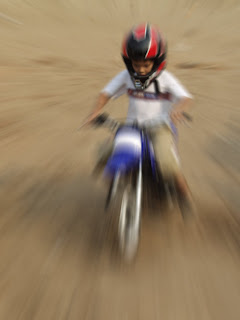
My son was very upset with me recently because he wants to learn to drive a car and I seemed, as far as he was concerned, criminally disinterested in teaching him. Fortunately, it was easy for me do deal with simply by plonking him in the driver’s seat and watching dispassionately as he realised, with ever increasing frustration, that even with his advanced age of eight years, he was still not big enough to reach the pedals. Naturally, it was all my fault that his legs were too short. I helped him get over his disappointment by sitting him on my lap and operating the pedals, thereby allowing him to take the car for a spin in the field.

There are a series of milestones in every child’s life that are a part of growing up but cause great angst to a parent. Their first day at school; the first time they start to stray from the safety of home and garden; riding a bike on the public highway. About the worst, though, has to be when your whole reason for being passes his driving test. I have a few years left to ponder this before the inevitable fear manifests itself, but Dominic’s evident keenness to get behind the wheel (he can already ride a motorcycle, albeit a miniature version of the real thing) reminded me of how keen I was, and, worryingly, how I behaved after passing my own test.

I am as ashamed of requiring three attempts to pass my driving test as I suppose a student pilot would be at taking twenty or so hours to go solo rather than ten. My first attempt ended suddenly with my head bashing painfully off the steering wheel as the examiner, noticing the distraction the blonde in the red E-Type was causing his young, testosterone laden candidate, decided that his intervention was necessary to prevent me ploughing down the little old lady who had evidently grown old assuming that a pelican crossing with an illuminated little green man provided some sort of invulnerability. The second test ended, somewhat to my dismay considering that I was driving a 1957 Morris 1000 with a crash gearbox, in a failure due to incorrect use of the gearbox. Undaunted, I had another go but on the morning of the test was so nervous that I stammered through the number plate I had to read at a distance to prove that I could at least see enough to recognise a car at ten paces, and stalled the car so many times before I even got out of the test centre that I was ready to give up immediately and save everyone a lot of time and paperwork.

Despite what many people say about driving examiners (and lawyers), there are one or two decent ones about. Sadly, as they very rarely advertise their humanity with a neon sign welded to their foreheads, they are almost impossible to recognise until at some very unexpected moment, like the sun finally breaking through hellish storm clouds with the attendant promise of easier sailing ahead, their bureaucratic façade crumbles to reveal, well, basically a decent bloke. Maybe it was thoughts of an uphill entry onto the very busy A50 and, based on my performance thus far, his chances of survival that prompted the examiner to tell me to pull over. As I pulled in, kerbing the wheel in the process, I resigned myself to the ignominy of being driven back to the test centre by an unimpressed examiner. Instead of ordering me out of the driver’s seat so that we could swap places, however, he pulled out a packet of unfiltered Players and offered me one.

Glorious nicotine. We sat there together in the car without a word, he probably wondering how hard earned his paltry salary was and me just rejoicing in the waves of peace that flushed gently through me. OK, I obviously wasn’t going to pass but it wouldn’t be the end of the world, would it? The statuesque Sally Bent and the sylph like Melanie Whateverhernamewas would just have to wait for the romantic lay-by trysts that with youthful optimism I was sure were guaranteed, as soon as I had my own wheels.

Being a decent bloke as I had now decided he was, the examiner had to at least do me the courtesy of going through the motions, so we had a relaxed run around the town before ending up at the test centre again. I answered the obligatory questions on the highway code and then we both got out of the car, me looking for my instructor so that I could be driven home, he fumbling with his clipboard and flip charts. I went round the car to shake his hand, sportingly. I didn’t like the idea of failing again but I didn’t feel badly done by, certainly not as outraged as I was the last time for being censured for not stuffing my Dad’s gearbox up by changing into first while we were still rolling. He gave me a piece of paper and without looking at it, I thanked him. It was only when my instructor came over to take the car keys from me that I realised. She was too nice a person to rejoice at the prospect of providing me with yet more expensive lessons. I had passed. The examiner looked at me as he had no doubt thousands of other fledgling motorists and waving his clipboard in the general direction of my instructor gloomily pointed out that, ‘This young lady has taught you to pass a driving test, now you must learn how to drive. For God’s sake, son, take it easy until you really know what you are doing.’

‘When will that be, do you think?’ I replied.

He studied me sadly and reached into his anorak pocket for another Player’s. ‘Never’.

On the way home with my instructor driving, for even though I had the pass certificate in my pocket, the law sensibly precluded me from driving excitedly away from the test centre (dying with the ink still wet on a pass certificate causing newsworthy carnage on my way to Valhalla no doubt being bad for Department of Transport pass statistics), she pointed out that the examiner’s remarks were not so much directed at me as a general indictment of human attitudes to risk, especially young male humans for whom risk is, let’s face it, as vital to overall well being as food, beer and the ever present chance of a first bonk. So naturally I wasn’t paying attention. I was looking forward to my first solo. Then I would be in charge and could drive without the constant nannying; ‘The outside of the curve, please’; ‘Take the long way round, less chance of you skidding’; all delivered in the monotones of the long-suffering, undoubtedly very bored professional.

Long way round? I had never seen Moss, Clark or Hill take the long way round, not unless they wanted to see someone sneak up the inside and spray their goggles with dirt and second hand Castrol racing oil before disappearing into the distance. No. These guys left rubber on the inside kerb and kicked the dust off the outside of the exit. All that tarmac was there to be used and if I managed to get round a corner at 45 the last time, what the hell was wrong with trying it at 50 this time? I am sorry. As far as I was concerned, the A5 was the Mulsanne Straight and the only way an 1100cc Vauxhall Viva was to sneak unexpectedly by the P6 Rover in front was by slipstreaming two inches from its back bumper and then popping out on a downhill stretch and beating it to the next blind corner. There must have been hundreds of middle aged duffers who, gratefully accepting slippers and journals from the mouths of faithful mutts, sank back into their wingbacks wondering what it must be like to drive with the consummate skill demonstrated by the young man in the Viva who had just forced them and their shiny jalopies through the roadside hedge and into the Leicestershire countryside.

My fun lasted exactly seven days. Having taken three attempts I was one of the last of my contemporaries to acquire their first wheels, mine were on loan from my mother, so it was a big group that I joined at the Globe Inn near Snarestone. I didn’t get the bonk I was by now pretty desperate for, but I’d enjoyed the beer and I was about to get all the excitement I could still walk away from. Having rather spectacularly failed to persuade the luscious Sally to explore the local highways, byways and secluded lay-bys with me, I decided that it would be rather cool to roar off into the setting sun in a cloud of swirling dust and tortured rubber. I am sure that Colin McRae could have done it. Or Vattenen. Any Finn at all really. But I wasn’t McRae. Or my brother come to think of it; if our surname was Schumacher, then I would be Ralph and he would be Michael, and my brother’s name really is Michael. And he lives in Germany. As far as I know, I have no Viking blood in me whatsoever so there was no way that I was going to get mother’s car through the quarry bends at over 60. Especially not with a couple or so of pints of Pedigree Best Bitter sloshing around inside me more or less where the seatbelt should have been.

The back tyres let go and the arse end smacked a telegraph pole spinning me across the road and into barriers that impeded an involuntary flight into the famous quarry, but well patinating the other side of the car in the process.

Have any of you seen that famous 1970 film, Le Mans? The bit where Steve McQueen in a Porsche skids out of control and rattles between the Armco before finally coming to rest and then sitting there, head bleeding, reliving every agonizing second of his sudden departure from the race while what’s left of his car steams gently away? The ticking of hot metal cooling? The smell? Well, it was exactly like that.

I vomited up the steering wheel and carefully extracted the handbrake lever and seat cushion from the ever so tight grip of my sphincter. Astonishingly, the car still ran and, even better, there had been no witnesses so the council could sort out the unexpected damage to their barriers by themselves and at leisure in the morning. 

I was too young to believe, or even understand, this delayed reaction stuff. I had survived, further proof to a juvenile mind of amazing motoring skill so what we now know as ‘Post Traumatic Stress Syndrome’ came as a bit of a shock to me. I was fine, my only concern the compilation of a plausible excuse. It was an accident, by definition an unexpected event the blame for which attached to forces beyond one’s control. A couple of hours later, however, I suffered severe injury as a direct result of the same accident. Oddly enough, about five minutes after my father arrived home and saw what I had done to the car.

My Mother did her best to protect me but my father was as fit and fast as a terrier and had the advantage of having survived a twenty year career in the Army so knew all the dirty tricks I had never even dreamt of. I didn’t stand a chance. Mind you, it did encourage me to learn the delicate art of body repair; firstly my own, although I will concede that Matron at the local cottage hospital and Mother Nature had hands in that; but then I had to fix the car I had so recently trashed. Amazing what sins can be hidden with the judicial use of a ball pein hammer, about a ton of body filler and all the Holt’s paint spray cans my paper round money would run to.

So all in all, I was lucky. And looking back on it, now that I am a father, so was my Dad. I had an accident, a scary one, and walked away from it. I had cost my Dad a lot of money. Bashed up and sagging with the weight of amateurishly applied body filler, the car was worthless but, even though I had behaved like a lunatic, I hadn’t killed anyone, I hadn’t killed myself and, most importantly, I had learned a lesson I would never forget.

Only a few years later, I passed my General Flying Test. I went solo in less than ten hours but doing so did not qualify me yet. Oh no. I had to complete a further 26 hours training before I was allowed to go for the test itself which qualified me for the most basic licence of all, the Private Pilot’s Licence. I could not fly at night, I could not fly into clouds, basically, I had at all times to be able to see where I was going. I could not fly fare paying passengers, anything with more than one engine or anything heavier than a Mini. I could not fly any other type of aircraft than the ones I had learnt in. If I fancied a change, I would have to pay for more lessons to qualify on type. To usefully progress, I would need many more hours of training to qualify for my instrument rating, night rating, multi-engine rating, commercial licence, the list goes on and on just as the costs rise. Everyone accepts that flying an aircraft is a major responsibility and only the competent should be allowed to do so. And yet UK law allows, should I have been so inclined and the necessary cash been available, to buy a car capable of three times the speed of the aircraft I was licenced to fly immediately after passing what is, let’s face it, quite a simple driving test. A few hours of instruction, a quick exam and the sky, or at least the horizon, is the limit. An aircraft doing 120mph in a wide open sky has to be far less dangerous than a Bugatti Veyron doing 300 mph on a crowded motorway. Less dangerous even, than a Ford Mondeo sticking to the speed limit. And yet the training requirements are so vastly different. I am not sure what most people think but I would say that a cursory comparison between the percentage of light aircraft that plough in and the percentage of vehicles that crash suggests that the Civil Aviation Authority are doing something right, and that the Department of Transport haven’t quite got the hang of things. All those hours and professional training to get the most basic of pilot’s licences yet a driver’s licence requires only a few hours pootling about, doesn’t even have to be a professional instructor, your Granny could teach you if she was inclined, followed by a quick run around the block with a DoT examiner and you are legal. No wonder parents are nervous when the law says it is OK for their adolescent and inexperienced off-spring to be in charge of a motor vehicle after only the most rudimentary preparation.

Nearly three decades on, and with my father long gone so no-one to turn to for advice, Dominic is on my heels. To be honest, it is probably a bed that I made for myself. At age two, he was driving around the garden in an electrically propelled jeep and, a couple of years later was clearly longing for more. By then we were back in Angola and, evidently taking complete leave of my senses, I took him to the new motorcycle dealership, the first one ever in Luanda. Naturally it had to be a Yamaha dealership and, of course, right in the middle of the showroom, sweetly lit by overhead 12 volt lighting and not nearly obscured enough by a large pot plant, was a PW50. Dominic leapt astride it and sat there. All went silent. Even the noisome salesman understood enough to keep his gob shut. For Dominic, the walls of the showroom were now transparent. The neighbouring blocks of flats had disappeared and all he could see was the long straight down to the first bend at Magny-Cours. He didn’t just want it, he needed it or he would expire in the next five minutes. I just happened to have enough beer tokens on hand, and enough of them inside me, to conclude the transaction.

As a father, of course I was very nervous. Anything that propels us faster than our legs can carry us is inherently dangerous and even our legs let us down occasionally (mine usually outside pubs, but so far such tumbles haven’t been fatal and I was invariably too anaesthetized to feel pain anyway). Dominic was determined to learn to ride a ‘bike and there was very little I could do to stop him. In a moment of lunacy, I had given him the means so now, instead of suddenly returning to the real world at the end of a half hour of Discovery Channel and wondering where in the house he might be, every five seconds I was darting to acute consciousness and wondering how many miles he had covered this time.

I was seventeen when I had my first and most serious accident. My son was four when he had his first and, let’s hope, most serious. Going full tilt on his PW50 (despite my advice; I am old and stupid in comparison to a young blood and should, therefore, be ignored), he failed to notice the lunatic hurtling in from his left and painfully smacked into the side of his car at, ooh, I don’t know, 20 miles an hour? Running a kid over here is seriously bad for one’s health so the driver of the then severely dented car was grateful to make it out of the neighbourhood with nothing more than a bit of phlegm on his windows and a few half empty beer cans bouncing off the bodywork as a highly partisan crowd of hitherto bored neighbours launched gleefully into the melee. Dominic was scared witless, not I suspect at the damage he’d caused but at how close to death he had been and an uncertainty about my reaction. So what should I have done? Beaten him half to death for his recklessness? The owner of the car damaged in the accident had no doubt learned not to risk driving irresponsibly in a residential area. The neighbours had ensured that I would not liable for any compensation. The damage to Dominic’s motorcycle was easily repairable and the cuts and abrasions he had suffered would be a salutary reminder, for a week or so at least while his body healed, of the folly of driving too fast for the conditions. I was sure that he had a new awareness of the dangers that can so unexpectedly thrust a stick in one’s spokes.

My father once caught me smoking. Instead of giving me the hiding I undoubtedly deserved, he sat me down on the sofa and suspecting, with some justification, that I had been at his spirits as well, poured me a very large glass of malt whisky. He then selected one of his larger cigars and made me smoke it and finish the scotch to the last drop. Neat, no water, no ice. I was fourteen at the time. I did feel ill afterwards but soon recovered. Sadly for my father, considering that his was a game and humane attempt to dissuade me from the evils of tobacco and alcohol by a man brought up as he had been with Victorian attitudes to discipline and, therefore, far more likely to resort to the rod, all he succeeded in doing was to provide me with a taste for fine malt and Cuban cigars, a taste I still have to this day. Nicotine and alcohol, although vices, are pleasurable pursuits the dangers of which are, especially for someone so young, completely incomprehensible. Are they not obviously enjoyed by so many? Not, however, by my father, who although had the odd drink and smoked a pipe, did neither to excess. Having suffered directly at the irrational and malevolent hands of an alcoholic and then watched him expire painfully as a result of emphysema and finally, the coup de grace, cancer. Sad then that his innovative attempt at child psychology should fail so miserably in this instance.

An accident, a near death experience, however, reminds us of how vulnerable and fragile we are. A youngster is, by nature, an optimist. Death is such an abstract notion and the possibility of it so far away that it rarely intrudes on the consciousness. And this is good. It is nature’s way of ensuring the survival of the species, of ensuring that there would be sufficient brave enough to poke a woolly mammoth in the ribs with flint tipped sticks to guarantee the survival of the larger group. The ability to appreciate the consequences of one’s actions is undeveloped when young. Necessarily so for if it were, the human race would have died out long ago having achieved nothing. We would have been a bunch of wimps beaten to extinction by a more aggressive species. The human race survives because of, not in spite of, the recklessness of youth as it has always been tempered by the guidance, the reining in of over exuberance, by the experienced. That is why the idea of raising the age before which one can drive is silly. I advocate lowering it. I am in favour of raising the age before one can legally drink alcohol to 21 as it is widely accepted by an experienced medical profession that early exposure to alcohol vastly increases the likelihood of developing some form of alcohol dependency later on in life, the consequences of which are profound. I am a heavy smoker but am 100% in favour of any and all legislation that limits smoking. It is never too early, however, to gain useful experience, the kind that will develop maturity, the appreciation of the consequences of one’s behaviour. Driving is not a vice it is almost a necessity, a part of modern living. I do not need to smoke or drink to earn my living but without a car I would be stuffed. Raising the age barrier will only serve to delay the inevitable. What parent has any real influence on a 17 year old, let alone a 19 or 21 year old? If these youngsters have not learnt the lessons their parents can provide before being wracked by hormonal changes, then there is an ever decreasing probability that they can seriously influence their child’s behaviour thereafter.

I am generalising of course as there will always be exceptions. Legislation is a very blunt tool, a sort of ‘one size fits all’ but in this case, I feel rather than achieve its noble aim of reducing the accident rate amongst young drivers, it will have little effect and cause a great deal of frustration and dissent. Seventeen? Twenty-one? Whatever age they start, when they first take to the roads, they will still be inexperienced. The proposed legislation rests on the assumption that all seventeen year olds are irresponsible and must, therefore, be excluded from the highways. Nonsense. Some are irresponsible of course. The majority, however, are good, honest citizens who just want to get on in life and enjoy all it’s benefits. The only thing they lack, through no fault of their own, is the sense of responsibility that only guidance and experience can develop.

In the old days, and certainly when I first learnt to ride a motorcycle, a sixteen year old could ride a 50cc moped. To all intents and purposes, a motorcycle but limited in its performance by its tiny capacity and the power it could produce. At seventeen, however, there was no limit and having passed a simple test, the young blade could then ride a motorcycle of the biggest capacity he could afford and capable, in some cases, of ridiculous speeds. Not surprisingly, the death rate amongst young riders was horrific. Recognising this, some sensible legislation, modified over the years, was introduced. Essentially, power output of the ‘bike is limited according to entitlement and experience. I am over simplifying the regulations but basically, it takes two years of riding and various tests before the full entitlement to ride whatever you want can be achieved. The age limit wasn’t raised, a sixteen year old can still get astride a ‘bike, even if of meagre performance, it will just take longer to get that unrestricted licence. Now, instead of the majority of motorcycle related deaths being in the 17 to 21 year old bracket, it is riders in their thirties. Why? Well simple, really. The new laws that have done so much to force teenagers to learn as safely as possible, have completely ignored that it is experience not age that counts by providing a fast track to the full licence for the over 21’s. The typical motorcycle casualty these days is the individual who, having secured a stable career, has met his obligations to his family, is in control of his expenditure (and is finally enjoying some disposable income), and now wishes to let his hair down a bit and revel in the last of his youth. Nothing sexier than the latest Honda Fireblade or Ducati, is there? They are not going to buy the 50cc Yamaha FS1E that I learnt to ride on and get some experience under their belt. They can afford the very best, the fastest and most powerful exotics in the showroom and passing the test is easy. Sadly, enjoying the last of their youth is exactly what all too many do. Right up until they plough into the Armco at 150mph. Or even 30mph. Losing control can be fatal at any speed. Age has bugger all to do with experience.

Instead of raising the age at which a person can get behind the wheel, they should lower it to sixteen. At sixteen, as with motorcycles, an individual should be allowed to obtain a provisional licence. For cars, this would entitle them to attend a basic vehicle handling course delivered by a registered institute after which, accompanied by a full licence holder, they may drive vehicles of limited weight and power output on public highways. This would allow parents to let their children, once they are sixteen and have passed the basic handling course, to chauffer them to the shops and on any other trips they need to make. At seventeen, their offspring may apply for a test, which, if they pass, would allow them to drive the same vehicles of limited weight and power output unaccompanied for two years at which point they would be allowed to take their final test. The successful completion of this would then entitle them to drive whatever they, or their benefactors could afford. The only exemption that an older student driver could enjoy is the requirement to drive for one year accompanied by a full licence holder. They would still, however, have to attend the basic handling course, followed by the usual series of driving lessons before taking the intermediate test allowing them to drive restricted vehicles for two years. If I know young people at all, the chance of getting behind the wheel at sixteen, even if it means being accompanied by a nagging co-driver, would be irresistible and there would be a high percentage that would take advantage of the opportunity, much to their own ultimate benefit and that of other road users. 


I could go on and suggest that persistent offenders, those convicted of several speeding offences, driving without due care and attention or reckless driving should face the threat of having to re-enter the system. There is no question that an individual convicted of driving under the influence of alcohol or drugs should be banned without hesitation but it is sometimes hard for a magistrate to hand down a sentence for a lesser offence which would effectively preclude that person from using the means necessary for him to earn his crust. Under the system I propose, however, it would be a damn sight easier for the same magistrate to limit a person’s access to powerful cars if the accused has clearly demonstrated his lack of maturity behind the wheel. Condemning an irresponsible Porsche owner, whatever his age, to driving an Aygo for two years is going to hurt. His pride for a start and definitely his lifestyle but it would not prejudice his ability to live or, more importantly, support his family. Having to sell his Porsche and stand in the queue at a Toyota dealership would leave a lasting impression.

And there are other advantages. Such legislation would create a demand for smaller, lighter, less powerful and, therefore, less polluting vehicles. As far as I can see, both sides of the political spectrum, Labour with their congestion charges and anti 4x4 legislation, and the Conservatives with their new green veneer, would welcome any initiative that encourages more efficient vehicles onto the roads, at least for the two years that all new drivers would need them. Similarly, manufacturers love a captive market and would respond with the development of increasingly innovative vehicles that, while within the constraints of legislation, would attract the novice driver. Insurance underwriters would love it. Instead of having to cover the risks posed by inexperienced drivers causing mayhem with powerful cars, they could sleep easier at night knowing that a significant portion of the risk they must cover has been mitigated and the lower premiums have not affected their bottom line. Overworked and under funded accident and emergency departments of hospitals would enjoy some relief, with the resultant reduced demand on strained finances. Parents might be able to relax, at least a little.

I can see it now. Loads of small, safe, efficient cars running around with stereos more powerful than their engines, the driver’s of which are all the time gaining the experience that will allow them to enjoy themselves in the future without endangering their own health or that of other citizens.

So there it is, a simple choice. Raise the age limit for a licence and see hordes of crazed 21 year olds going mad or start them off early and gently. I say, don’t raise the limit, lower it and let our kids gain the experience they need as early as possible. Rather than legislate to delay the inevitable, face it as early as possible. But responsibly.